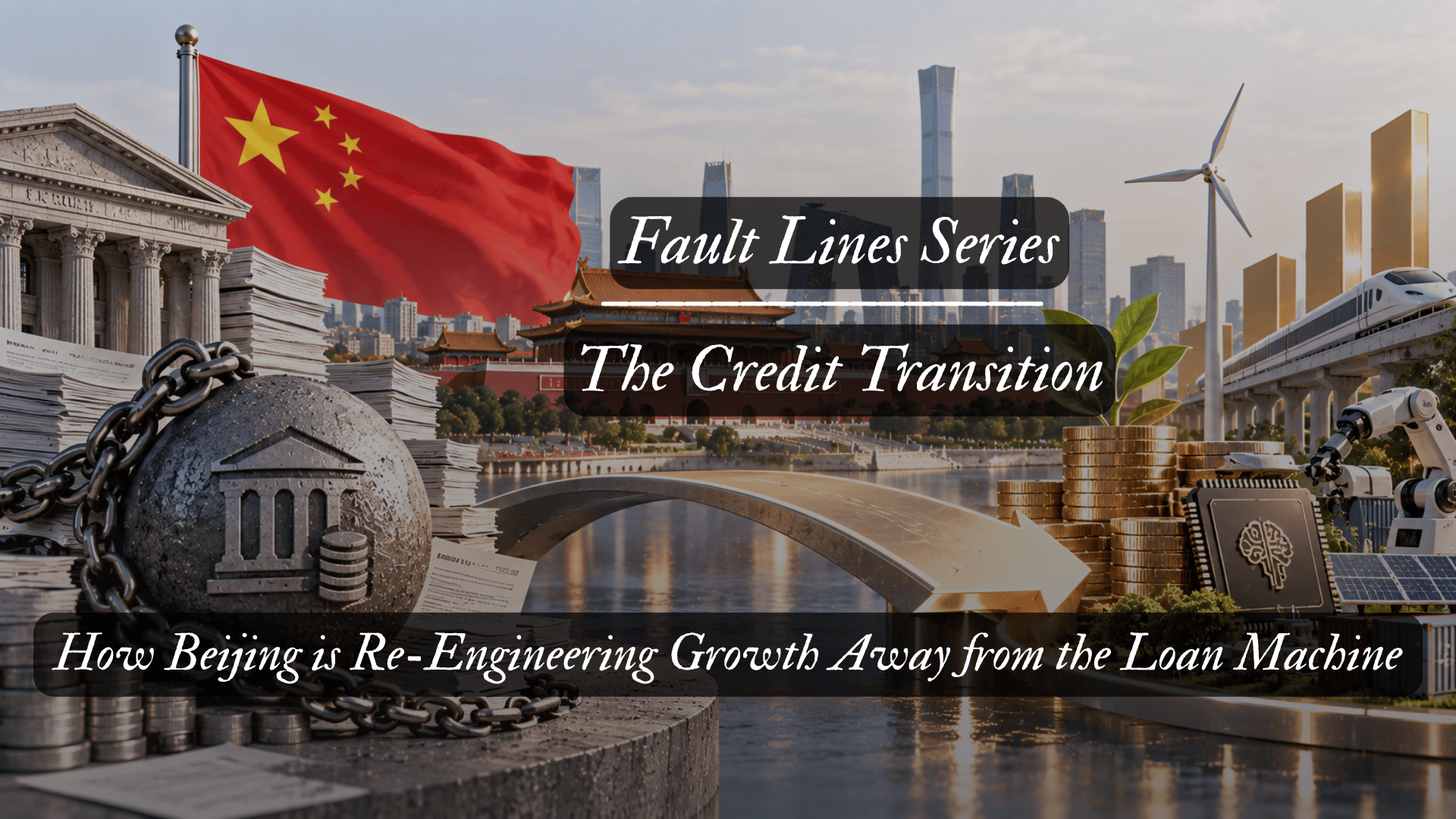
The Credit Transition | How Beijing is Re-Engineering Growth Away from the Loan Machine
The reassuring headline was that China's banks returned to net lending in August. The funda‐ mental underneath it is larger and less comforting: the central bank has now put the exhaus‐ tion of the credit-driven growth model on the record, in the Party's own doctrinal journal, and set out the apparatus meant to replace it. The diagnosis is honest and the plan is coherent. The binding constraint is neither vision nor will — it is speed and sequencing.
Beijing has stopped defending the old credit model and started dismantling it in public. The dia‐ gnosis — idle funds, rising leverage, a demand-side rather than supply-side constraint — is correct, and the falling macro leverage ratio shows the intent is real. But direct financing cannot backfill a shrinking property-loan book at speed, supply-side tools cannot conjure borrowers who are re‐ pairing balance sheets, and directed credit risks importing overcapacity into the new industries. Read it as a credible, multi-year transition, not a stimulus cycle — and expect its near-term sig‐ nature to be soft credit, a firmer bid for duration, and a liquidity-led rather than earnings-led lift in onshore markets.
#China, #PBOC, #PanGongsheng, #CreditTransition, #Deleveraging, #DirectFinancing, #MacroLeverage, #Fif‐ teenthFiveYearPlan, #SocialFinancing, #CGB, #Renminbi, #MultipolarOrder, #CapitalInsights



Washington Reclaims Tokenized Stock Trading
Ignore both the “historic revolution” and the “nothing to see here” takes. This is a deliberately limited, legally fragile bridge — built to pull a fast-moving business back onto US soil and shape it before it grew up somewhere else. The part that matters most isn’t people trading Apple at midnight. It’s the quiet groundwork for these tokens to become plumbing in the wider financial system — and the two-regulator standoff that decides how far, and how fast, Washington can take it.
#Tokenization, #MultipolarOrder, #CapitalMarkets, #SECvsCFTC, #DollarSystem, #Repo
Fault Lines | The Multipolar Order | The Custody Layer & Hong Kong’s Gold Hub
Hong Kong’s fourth attempt to become a gold hub is being read through the wrong lens. Most commentary measures it against London and New York on price and liquidity—and on that scorecard it looks like another underpowered venue. But the venue is not the point. What is being assembled in Hong Kong is a settlement and custody layer for physical gold that sits outside Western jurisdiction, in the Asian time zone, and increasingly on a yuan rail.
That is a reserve-fragmentation story, not a trading story—and it is closer to working than the “fourth try” framing admits. The objective is not to mint a “Hong Kong price” or to unseat London and New York on discovery. The goal is optionality of custody: a trusted, Asian-time-zone venue to trade, store, clear and deliver physical gold outside Western jurisdiction, with a yuan rail attached.
#Gold, #ReserveFragmentation, #HongKong, #Dedollarisation, #RMBInternationalisation, #MultipolarOrder, #CentralBanks, #Custody, #FaultLines
The Hidden Bill | Who actually pays for a government's rising debt costs
So far the series has been about supply — how much new debt the market has to swallow, and on what terms. That's one half of the ledger. The other half is simpler and closer to home: when government borrowing gets more expensive, who actually feels it?
#Treasuries, #AbsorptionPremium, #WhoPays, #InterestRates, #Inflation, #RealAssets, #FundamentalsThroughTheNoise
After the Free-Money Era | What Fifteen Years ofNear Zero Interest Rates Left Behind
For fifteen years, money was almost free. That era is over — but it did not leave cleanly. It buried weak points across the financial system that only show themselves when interest rates rise, and some are still waiting to surface.
#FreeMoney, #InterestRates, #ZIRP, #FinancialStability, #BondMarket, #Macro
From Washington to Your Wallet | Why the Bond Market Touches Everyone — & Who Really Lends America the Money
Why This Matters Even If You Never Buy a Bond You do not need to own a single bond for any of this to shape your life. It reaches you through the mortgage or loan you are already paying, through the company you work for — which borrows at these same rates to grow and to hire — through the value of your currency and the price of anything imported, and through the taxes that fund the world around you. The bond market is the quiet tide beneath all of it. None of this is a crisis today. But it is a slow change in the ground rules, and the patches applied so far have not altered it. The next real test comes in early November, when the Treasury decides how much long-term debt to sell — the first clear sign of whether improvisation is turning into strategy. That is why we keep tracking a story that looks, at first glance, like it belongs only to Washington. It doesn't. It ends up much closer to home.
#BondMarket, #USDebt, #Treasury, #PersonalFinance, #GlobalEconomy, #Explainer
What Comes Next? Treasury Buybacks Against a $40 Trillion Balance Sheet
Yesterday we looked at the Treasury's move to buy back more of its long-term debt, set against a national debt that has just crossed $40 trillion. The calm it bought was brief. Long-term interest rates fell the moment the plan landed, then climbed back within a day to roughly where they began. The market's verdict was quick: a helpful gesture, not a fix. That leaves the obvious question — what does the Treasury try next? One thing to watch above all: the November funding decision, and specifically whether the Treasury starts selling fewer long-term bonds. That would be the first real sign that improvisation is becoming strategy.
#Treasury, #BondMarket, #USDebt, #Bessent, #Macro
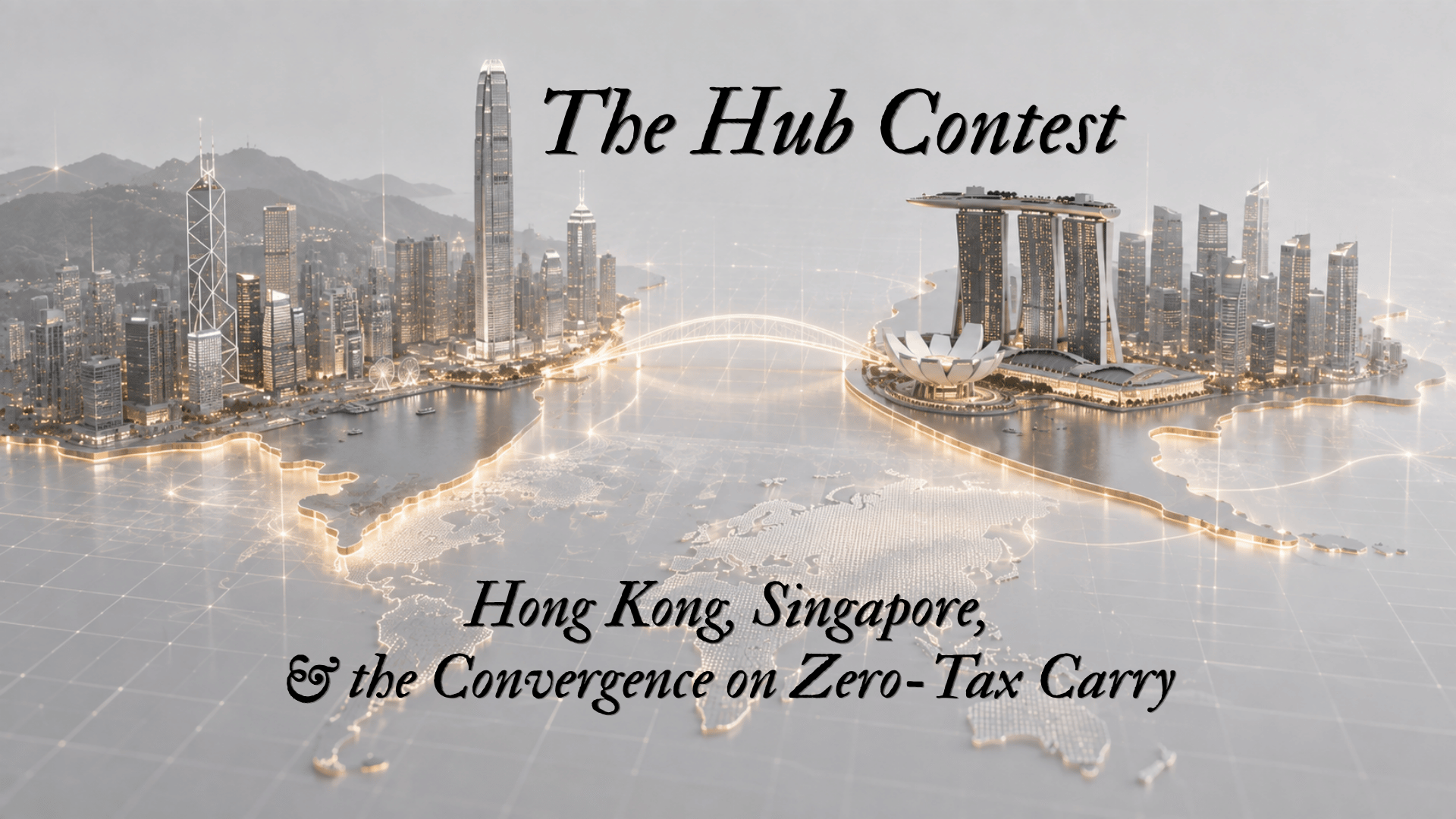
The Hub Contest | Hong Kong, Singapore,& the Convergence on Zero-Tax Carry
Both centres have now legislated near-identical exemptions on performance income. Once tax is commoditised, the contest for asset management moves to the levers that actually differentiate — capital access, talent mobility, and the shape of each hub's flow.
#AssetManagement, #HongKong, #Singapore, #CarriedInterest, #HedgeFunds, #FamilyOffices, #MAS, #HKEX, #CapitalMarkets, #MultipolarOrder, #DistributionReset
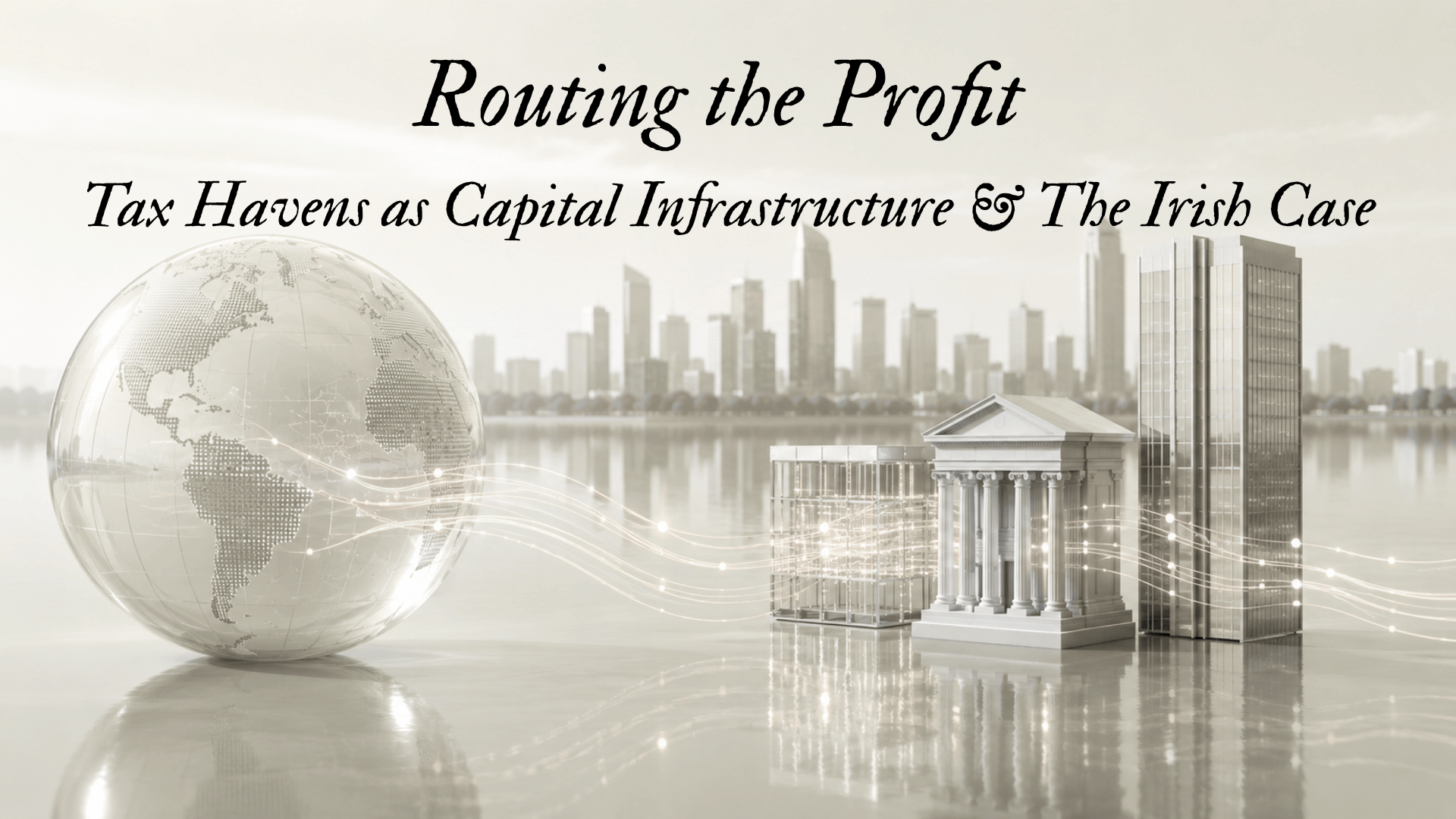
Routing the Profit | Tax Havens as Capital Infrastructure & The Irish Case
The tax havens that shape global capital are not the islands of the popular imagination but a small set of respectable, treaty-networked conduit states. This note reads the plumbing on its own terms — and examines what Ireland's version of it earns, and risks.
The purpose of this note is to explain that system on its own terms — as capital-flow infrastructure rather than scandal — and then to examine the jurisdiction at its centre for US corporates: Ireland. We look at why the structure exists, what it actually provides, what it earns the host country, and why the arrangement is more fragile and more contingent on external policy than the headline surpluses suggest.
#TaxHavens, #ConduitOFC, #Ireland, #CorporateTax, #PillarTwo, #GlobalMinimumTax, #ProfitShifting, #BEPS, #CapitalFlows, #FDI, #CountryByCountryReporting, #SovereignRisk, #IrishEconomy, #OECD, #SideBySide, #CapitalInsights, #PunjabCapitalResearch, #FundamentalsThroughTheNoise